by Lucy Ash, artist – Alexander Technique pupil of Kamal Thapen
When I started to learn the Alexander Technique, I kept being reminded of this quote by Pablo Picasso. ‘It took me four years to paint like Raphael, but a lifetime to paint like a child.’ The point about the Alexander Technique is that it’s about unlearning everything we have learned – what feels familiar and comfortable is often bad for us – routines of behavior acquired subconsciously over the years by repeating the same action again and again are likely to be the wrong actions. By adopting a technique that is about thinking and then doing, we can create positive change. But like Picasso this unlearning, the business of doing of things differently, takes time and courage.
Applying a technique to our approach to life and the world around us can have very powerful results, but you have to take a leap of faith. As a painter it helps me to apply a technique to my work that is about self-awareness and understanding my body, that way I can get more from it. Painting is very physical, so my body has to work for me. How well I paint depends on my awareness, my thought process, my sensitivity and intuition. By becoming more sensitive I can make better decisions and be more agile. Making art, like the Alexander Technique, is a lot about how the conscious mind connects and directs the unconscious mind so the work has a resonance. I work with mixed media, usually oil paints, spray paint and ink. The process of using mixed media is very exciting – there’s the wonderful thing of how the oil paint and spray paint interact, it’s not entirely predictable and is a process of discovery where I may not know what I’m doing but find out by doing it and being brave. Molding something out of nothing with a mixture of mediums is a big part of what my work is about. Like the Alexander Technique it’s not about the end game it’s about the process. Not knowing where colliding particles will land, not controlling them and not worrying about the rules is part of my approach to creativity.
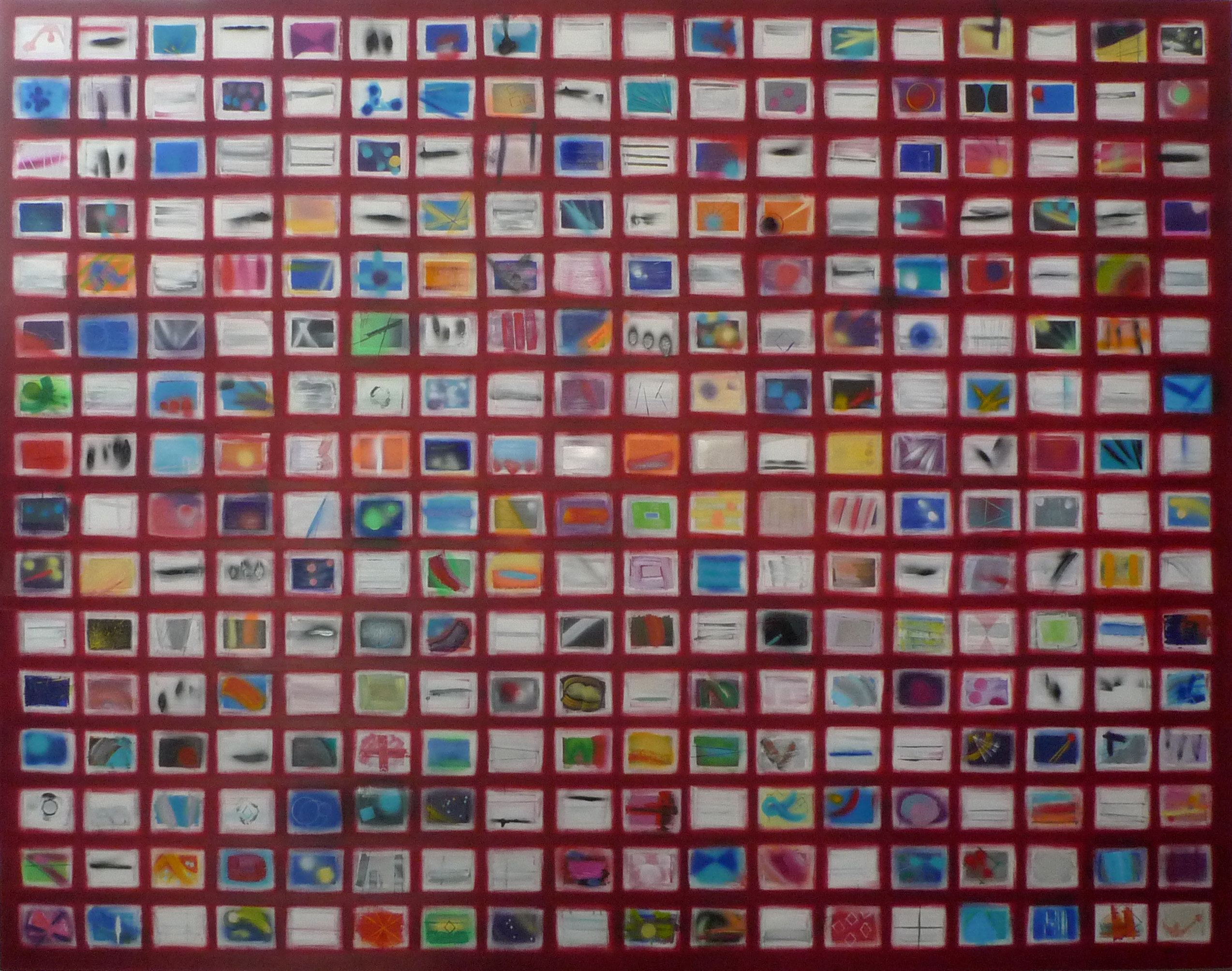
‘one thing into another’ mixed media on linen, 168 cm x 213 cm, 5’ 6” X 7’
Bringing something experimental all together to create a sense of wholeness gives a feeling of completion and satisfaction and pleasure. The pieces of a painting make sense of the whole; in the same way that the pieces of our body make up a whole. The relationship between our neck and head affect to the rest of our body and every subsequent movement and action stem from this connection which, when it works, brings about a graceful and fluid movement. If part of your body is out of sync it affects your whole being, which not only has ramifications on how well we feel but also on how we relate to the world and how the world relates to us, plus it parallels the quality of work we produce as well as the process of painting.
Painters are a bit like magicians in how they transform one thing into another and something out of nothing as well as juggle the constantly changing relationships that have ramifications throughout the whole rest of the work. One mark leads to another; a small mark can instigate big change, which is the exciting part of creating. So why is change, which is so inevitable, so very unwelcome? A changing world and personal change are incredibly scary even when the status quo isn’t that great. What we know is what we like because it feels familiar and safe and is where we would like to stay if we could, but we can’t. A technique such as Alexander equips us with the tools we need to venture out from the known present into the unknown future. It’s about the fundamental nature of being, integrating and grounding the whole person; it allows bad habits to be unlearned, great works of art to be painted, and needs to be embraced.
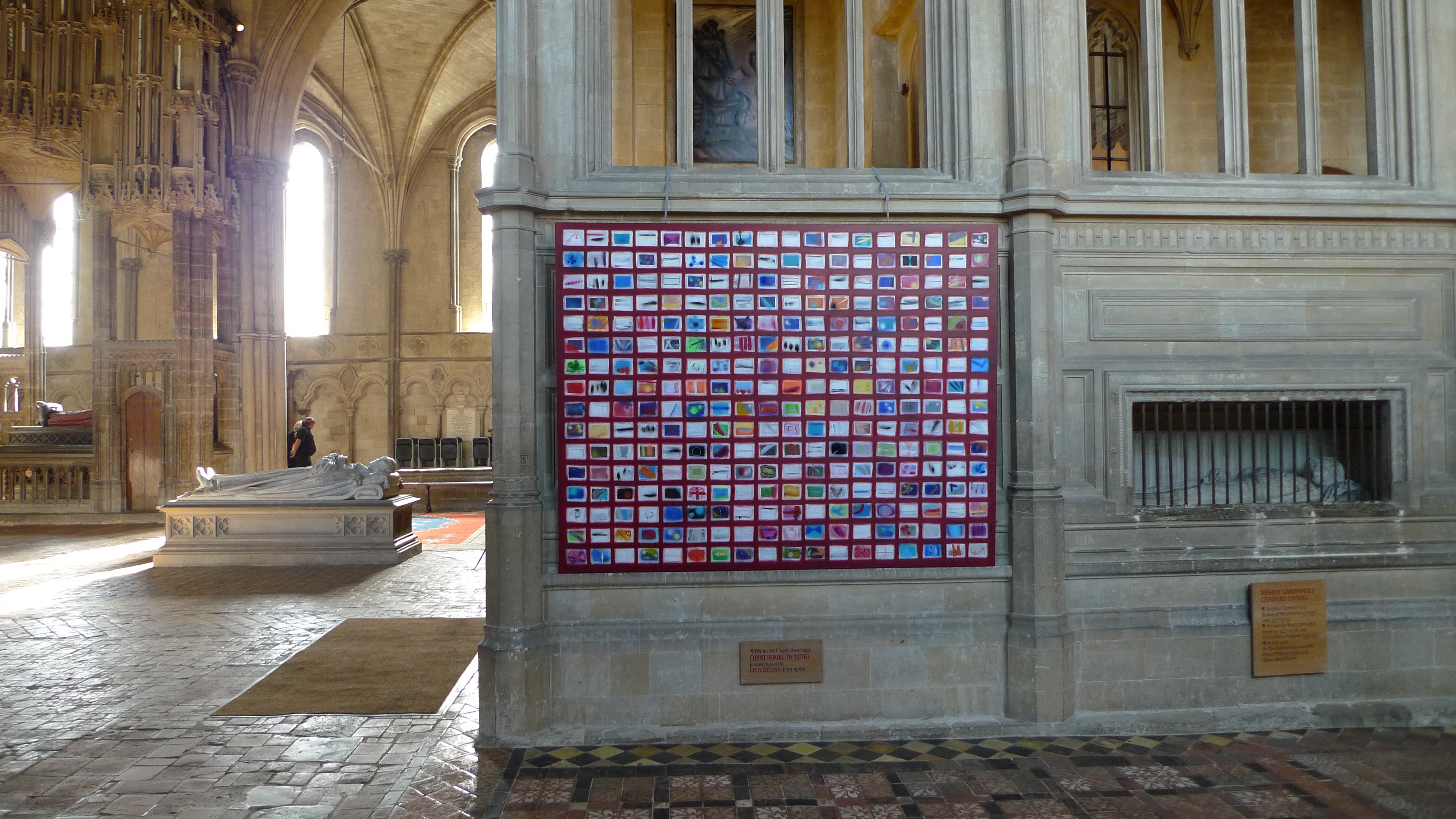
‘one thing into another’, Winchester Cathedral, 2013, part of Creative Collisions 10 days Winchester
 athite